

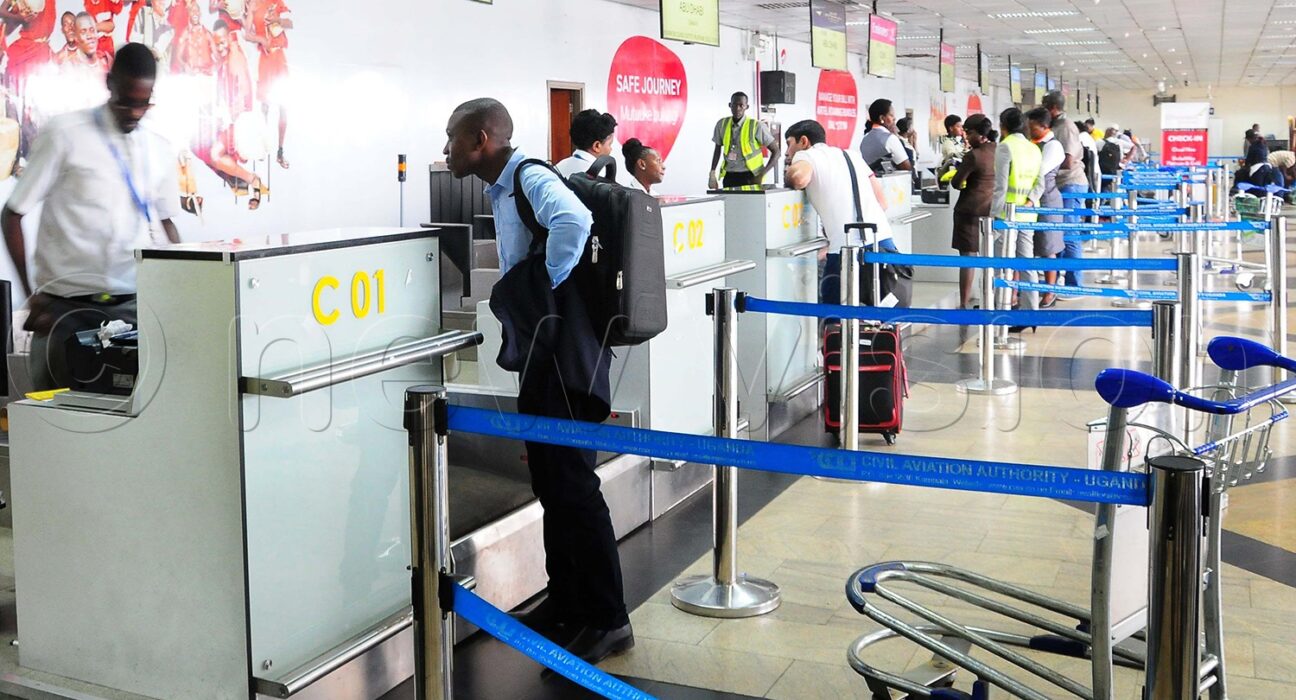
March 2026, the Government of Uganda made one of the most consequential travel policy decisions in its modern history. Citizens from 40 countries can now enter the country without first applying for a visa, a move designed to reduce travel barriers, boost tourism, strengthen trade links, and accelerate regional integration.
For many observers, the decision represents more than a bureaucratic change in immigration rules. It reflects a wider strategic repositioning of Uganda as a more accessible gateway to East Africa and as an emerging tourism hub on a continent increasingly embracing mobility and open borders.
To understand why the decision matters, it is important to first unpack what visa free travel actually means and how the policy works in practice.
What visa free travel actually means for travelers
Visa free travel simply means that citizens of selected countries do not need to apply for a travel visa before arriving in a destination country.
Traditionally, visitors to Uganda were required to complete an online visa application, pay the necessary fees, and receive approval before boarding a flight. That administrative step has now been removed for nationals of the 40 listed countries.
Instead, travelers from those countries can simply arrive at a Ugandan entry point, most commonly Entebbe International Airport, present a valid passport, and be admitted by immigration officials.
However, visa free does not mean unrestricted entry. Immigration officers still enforce standard border requirements, which include:
A passport with at least six months of validity
Proof of return or onward travel
Evidence of accommodation such as a hotel booking
Compliance with Uganda’s immigration laws
If those conditions are met, the traveler can be granted entry without paying a visa fee or completing advance visa paperwork.
For tourists and business travelers, this change removes one of the most common barriers to spontaneous travel.
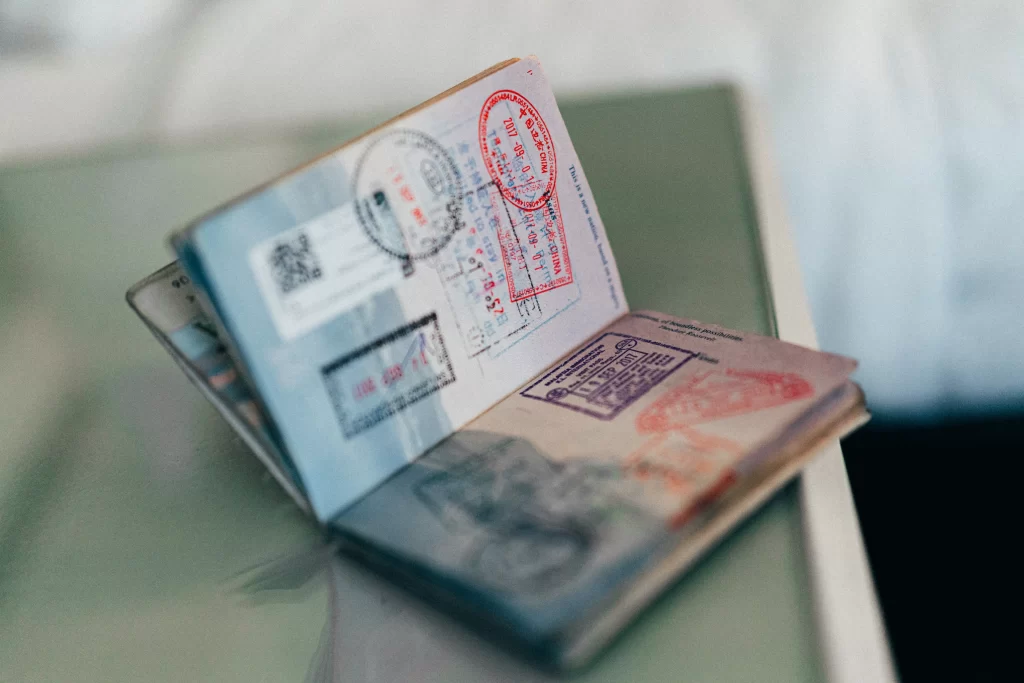
The three month stay period explained
Visitors entering Uganda under the visa free arrangement are typically granted permission to stay for up to 90 days.
This three month window allows travelers enough time to explore the country for leisure, attend conferences or business meetings, visit family, or conduct short term activities.
The duration of stay is determined by immigration officers at the border, but in most cases the allowance falls within the 7 to 90 day range depending on the traveler’s purpose of visit.
If someone intends to stay longer or work in Uganda, they must still apply for the appropriate permits, such as a work permit or residence permit.
In other words, visa free access simplifies entry for short visits but does not replace the country’s immigration system for long term stays.
The countries that benefit from the visa free policy
The visa exemption covers countries across Africa, the Caribbean, the Pacific, Southeast Asia, and the Middle East.
Within Africa, the list includes many members of the East African Community and other regional partners. These include Kenya, Rwanda, Tanzania, Burundi, South Sudan, Botswana, Ghana, Malawi, Mozambique, Zambia, Zimbabwe, Mauritius, Seychelles, Lesotho, Madagascar, Comoros, Eritrea, Sierra Leone, Gambia, and Eswatini.
Outside Africa, the policy extends to countries such as Ireland, Malaysia, Singapore, the United Arab Emirates, Cyprus, Malta, Jamaica, and several Caribbean and Pacific island states including Fiji, Tonga, Grenada, Barbados, and Trinidad and Tobago.
By opening its borders to these nations, Uganda is expanding its reach to markets that historically had limited tourism links with the country.
At the same time, the policy notably excludes major Western travel markets such as the United States, the United Kingdom, and European Union member states, whose citizens must still obtain visas before traveling.
The regional integration logic behind the decision
Uganda’s visa liberalization did not emerge in isolation. It builds on decades of regional integration under the East African framework.
Since the establishment of the East African Community in 1999, member states have gradually worked toward the free movement of people, goods, services, and labor across borders.
The community’s Common Market Protocol, which came into effect in 2010, already allows citizens of partner states to travel within the region without visas.
In fact, citizens of Kenya, Uganda, and Rwanda can cross borders using only national identity cards without needing passports.
Uganda’s new policy expands this principle of openness beyond the immediate region, positioning the country as a more globally connected destination.

Why visa openness matters for tourism growth
For the tourism industry, visa requirements are one of the most significant factors influencing where people choose to travel.
Complex visa procedures often discourage tourists from visiting destinations that require lengthy applications, paperwork, or fees.
By removing these obstacles, Uganda is betting that easier access will translate directly into more visitor arrivals.
Tourism has long been a cornerstone of Uganda’s economy. Before the pandemic, the sector generated more than one billion dollars annually and supported hundreds of thousands of jobs.
Uganda’s tourism offering is unusually diverse for a country of its size. Visitors are drawn to experiences such as gorilla trekking in Bwindi Impenetrable National Park, chimpanzee tracking in Kibale National Park, wildlife safaris in Murchison Falls National Park, and river adventures at the source of the Nile in Jinja.
Despite these world class attractions, Uganda historically receives fewer tourists than regional competitors such as Kenya and Rwanda. Removing visa barriers is one of the most direct ways to close that gap.
Economic benefits beyond tourism
Tourism is only one piece of the economic logic behind the policy.
Visa free access also encourages business travel, trade exploration, and investment visits. Entrepreneurs, investors, and conference delegates can now travel to Kampala with fewer administrative obstacles.
For a country whose economy is expanding and seeking deeper global engagement, easier travel can stimulate new commercial relationships.
Uganda’s government sees tourism and services as key sectors for generating foreign exchange and creating jobs. With agriculture still employing the majority of the workforce, diversification into tourism, hospitality, and international services is viewed as a strategic economic priority.
Visa openness therefore serves as a policy tool for attracting both visitors and capital.
A broader African trend toward open borders
Uganda’s move reflects a wider continental shift toward mobility and integration.
Across Africa, governments are increasingly recognizing that restrictive visa policies undermine tourism, business travel, and regional cooperation.
Countries like Rwanda have taken particularly bold steps by allowing visa free entry for nearly all African citizens. Meanwhile, Kenya has significantly simplified its entry requirements as part of its tourism strategy.
These initiatives align with the long term vision of the African Union, which has repeatedly advocated for visa free movement across the continent to support trade under the African Continental Free Trade Area.
Uganda’s policy contributes to that broader vision of a more interconnected African travel landscape.
What this decision ultimately means for Africa
The significance of Uganda’s visa free policy goes beyond the immediate list of 40 countries.
At its core, the decision signals a philosophical shift in how African nations view mobility. Instead of seeing borders primarily as barriers to control movement, governments are beginning to see them as gateways for economic opportunity.
For travelers, the change means simpler journeys and more spontaneous tourism.
For businesses, it means easier access to emerging markets.
For Africa as a whole, it represents another incremental step toward the long discussed but still evolving dream of a continent where people can move freely to explore, trade, collaborate, and invest.
Uganda’s choice to open its doors may therefore prove influential far beyond its own borders. If the policy successfully increases tourism arrivals and strengthens economic ties, it could encourage other African countries to pursue similar reforms.

About Memoir Uganda – Showcasing Uganda
We are a comprehensive tourism and travel media company unleashing information about Uganda. We offer, among others, an all-inclusive guide on everything Uganda such as itineraries, consular information, timely and updated tour and travel news and general information about visiting and living in Uganda.
To us, Uganda is more than a tour destination. It is our homeland. Our knowledge about Uganda is ocean deep and we love showing the country’s splendid beauty to the world. We aim at sharing and showcasing Uganda to the tiniest bit, better than anyone else. We also aim at conserving our home land through our un wavered efforts towards climate change awareness.
Our Memoir Magazine showcases Uganda’s diverse potential in detail that is often left out and unknown. You ought never to miss a copy. We robustly believe that traveling should make the world a better place for everyone.the world a better place for everyone.