

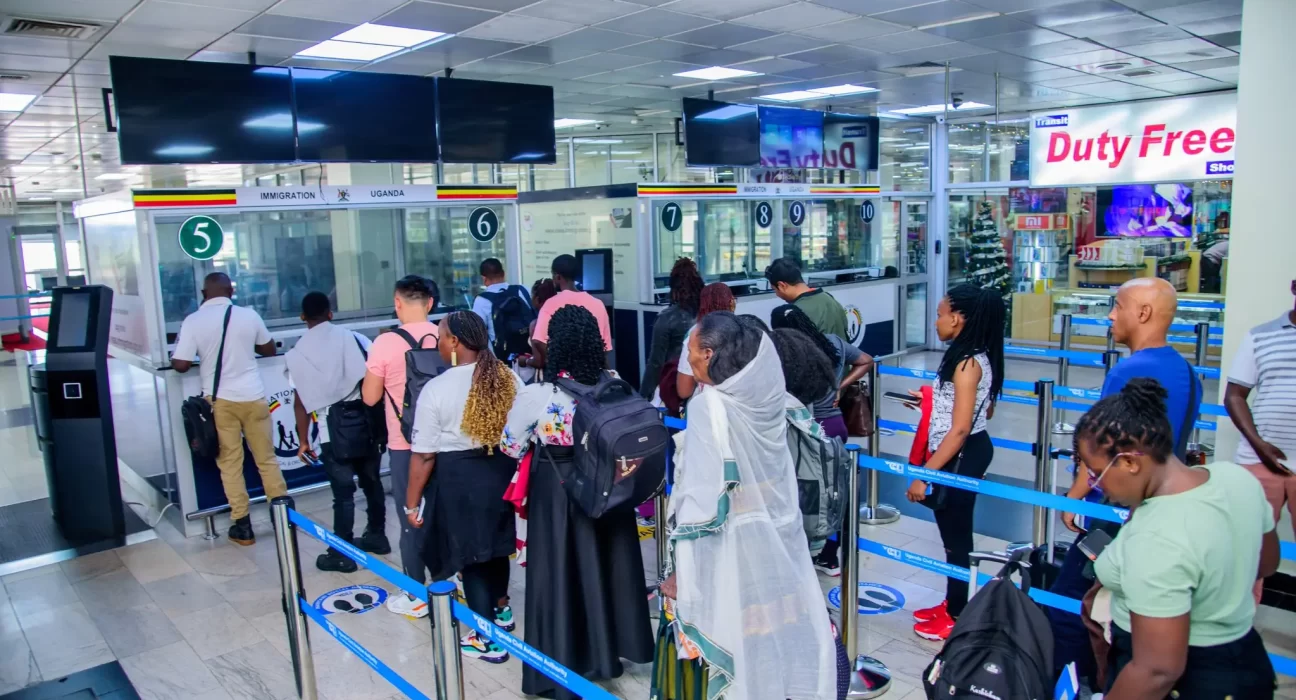
Ugandans studying, working, travelling or seeking permanent residence in the United States are facing another period of immigration uncertainty, with new rules on green-card applications taking effect this week, a major student-visa change halted by a court at the last minute, and the new U.S. fiscal year approaching on October 1.
For Ugandans, the developments come on top of restrictions already affecting travel to the United States, including visa bonds for some visitors and sharply reduced validity of newly issued visas.
A major Department of Homeland Security rule affecting international students, exchange visitors and foreign journalists had been scheduled to take effect on September 15. The rule would have ended the long-standing “duration of status” system for people in the F, J and I visa categories and replaced it with fixed periods of admission. Students and exchange visitors would generally have been admitted for the length of their programme, subject to a maximum period of four years, with extensions required in some cases.
But the change did not take effect as planned. On September 14, U.S. District Judge F. Dennis Saylor in Massachusetts blocked the rule while a legal challenge continues. That means the existing duration-of-status framework remains in place for now. The court case is particularly important for Ugandan students, researchers and exchange visitors already in America, who should watch for further developments rather than assume the proposed four-year system is now law.
A separate immigration change is due on September 18, when a new Department of Homeland Security public-charge rule takes effect. The rule rescinds the 2022 regulations and restores broader discretion to immigration officers when determining whether certain applicants are likely to become a “public charge.” It applies to covered applications for admission made from the effective date and adjustment-of-status applications filed from that date.
For Ugandans already in the United States and applying for a green card through adjustment of status, the practical message is to pay close attention to the latest USCIS instructions and the edition of Form I-485 being filed. Public charge is not determined simply because someone has received a particular benefit; officers consider the legally relevant circumstances of an applicant, and several immigration categories are exempt from the public-charge ground altogether.
The rule is also being challenged in court. Democratic-led states and local governments filed lawsuits this week seeking to block it, arguing that the new framework is unclear and could discourage immigrants from using benefits for which they are legally eligible. The Trump administration says the changes are intended to ensure immigrants are financially self-sufficient.
Attention is also turning to the October 2026 Visa Bulletin, the first bulletin of the U.S. government’s 2027 fiscal year. As of September 16, the State Department’s official Visa Bulletin page still lists September 2026 as the latest bulletin. October matters because a new annual allocation of immigrant visa numbers becomes available from October 1, potentially changing priority-date cut-offs for family- and employment-based immigration categories.
For Ugandans hoping to travel from Uganda to the United States, however, there is an additional layer of difficulty.
The State Department’s official guidance still says that visa services at the U.S. Embassy in Kampala are temporarily paused, a measure introduced on May 18 during the Ebola outbreak. The department says the pause covers tourist, business, student, exchange and other visa categories, while valid visas already issued remain unaffected. Ugandan immigrant-visa applicants are ordinarily processed through the U.S. Embassy in Nairobi rather than Kampala.
Ugandan B1/B2 business and tourist visa applicants also face a visa-bond requirement introduced earlier this year. An otherwise eligible applicant travelling on a Ugandan passport may be required to post a refundable bond of $5,000, $10,000 or $15,000, with the amount determined during the visa process. The bond does not guarantee that a visa will be issued.
The rules governing those bonds have also changed in an important way for travel. The State Department currently says bond holders must enter and leave the United States through commercial air ports of entry, including approved pre-clearance locations, and may not use land, sea, charter-air or general-aviation entry points. The money is generally returned when the traveller complies with the terms of admission and leaves the United States on time.
New visas issued to Ugandan nationals are also considerably more restrictive than they once were. Current State Department reciprocity information lists B1, B2 and combined B1/B2 visas for Ugandans as single-entry visas valid for three months. F-1 student, J-1 exchange and I-media visas are likewise currently listed as single-entry visas with three-month validity. Visa validity, however, should not be confused with the period a traveller is permitted to remain in the United States after admission.
Taken together, the developments mean Ugandans should be particularly careful about relying on older immigration information or social-media posts. A student already in America, a parent travelling for a graduation, a journalist on assignment, a family pursuing permanent residence and a tourist applying for a B1/B2 visa may now face very different rules.
For travellers, the safest approach is to check the State Department and U.S. Embassy guidance before paying for non-refundable flights or accommodation. For Ugandans already in the United States, maintaining valid immigration records, checking the I-94 after international travel and using the current USCIS forms has become increasingly important.
And with court challenges still moving through the American legal system, some of these rules may change again.

About Memoir Uganda – Showcasing Uganda
We are a comprehensive tourism and travel media company unleashing information about Uganda. We offer, among others, an all-inclusive guide on everything Uganda, such as itineraries, consular information, timely and updated tour and travel news,s and general information about visiting and living in Uganda.
To us, Uganda is more than a tour destination. It is our homeland. Our knowledge about Uganda is ocean-deep, and we love showing the country’s splendid beauty to the world. We aim to share and showcase Uganda to the tiniest bit, better than anyone else. We also aim to conserve our homeland through our unwavering efforts towards climate change awareness.
Our Memoir Magazine showcases Uganda’s diverse potential in detail that is often left out and unknown. You ought never to miss a copy. We robustly believe that traveling should make the world a better place for everyone. Thee world a better place for everyone.